Hello, I'm Randi
I'm a Product leader fueled by curiosity who is passionate about the why behind the work. I partner with teams to create digital products that solve customer needs.
(last updated July 2026)
What I'm currently reading: (nonfic) The Big Leap by Gay Hendricks; (fic) Where Her Secrets Lie by Katie Tallo
Last album I listened to: You Seem Pretty Sad For A Girl So In Love by Olivia Rodrigo
I build products that solve meaningful customer problems. Since 2018, I've led product teams through ambiguity, turning complex platform and customer challenges into scalable solutions with measurable impact. My diverse path gives me an uncommon ability to connect customer insight, business strategy, and technical execution.
Today, I lead a platform product team at Best Buy, where we build the capabilities that enable teams across the enterprise to move faster and deliver better experiences.
My Product Management Style
Human-centered design
By prioritizing the needs and experiences of customers throughout the product development process, I create successful products that resonate with customers.outcome-driven mindset
I emphasize outcomes over outputs. Focusing on solving the pain and friction points of our customers, both internal and external, are more important than just planning the next cool feature.Collaboration First
I work cross functionally with a lot of teams, including customer service, engineering, data science, UX, marketing, and more. I share our common goal through clear team communication.Agile mindset
Staying flexible is how we achieve high-performing results. I encourage my teams to embrace change, rather than avoid it, and to adapt as needed. This comes through iterative learning and experimentation.Case Studies
Case study 1: Scaling Product Delivery Through Platform Strategy
Problem: Individual product development teams across the enterprise were building their own integrations to connect with enterprise services like identity, pricing, inventory, etc. This resulted in duplicative engineering effort for the same goal, inconsistent implementations with competing support models, increased maintenance costs and overhead, and variable developer experiences. This was observed and an opportunity was identified to focus on a platform designed to make integrations easier, rather than improve one-offs.
Process: My first step is always to talk to the customer to understand the problem from their experience. In this case, these were internal customers who I interviewed to gain feedback on their friction, pain points, and goals. Learnings from these interviews validated some of my assumptions while challenging others, and I adapted my platform strategy as I learned. I paired this with quantitative data, like support hours and maintenance costs, to determine the value of the proposed platform. I focused on strategic investments to the platform experience on things like creating reusable integration patterns, defining governance, improving documentation, and prioritizing shared capabilities instead of one-off requests.
Throughout the entire process, I regularly presented and communicated my strategy and proposed value and impacts both up and down the leadership chain (to everyone from the VP to the help desk) to socialize the initiative and seek feedback on any gaps I missed.
Outcome: I created a platform strategy that reduced duplicate integration work across product teams while improving developer experience and accelerating delivery. This was adopted by 25+ product teams and supported hundreds of internal developers, eliminating repetitive integration work across multiple business domains.
Case study 2: Building Alignment Around a Shared Platform Vision
Problem: My team constantly received feature requests for our product that had valid priorities from the requestors, but often pulled the platform in competing directions (faster delivery vs stricter security governance vs standardization architecture vs engineering autonomy).
I challenged my team on how to build a platform that delivers value across the enterprise with the goal of shifting from one-off executions to more strategic value. To get there, I needed to define a clear product vision and long-term platform strategy to balance short-term delivery needs with long-term platform health. I needed to build consensus from my stakeholders (engineering, architecture, security, and business) on a roadmap that aligned with enterprise goals without shutting down requests.
Process: I needed to move us from a reactive approach to a more proactive one. Instead of measuring success by the number of features shipped or responding to the loudest request, I shifted our team prioritization to a more structured approach. By not focusing on simple yes/no fulfillment of our customers’ requests, we defined team success metrics like adoption, developer experience, delivery speed, and reliability. Instead of focusing on who the requestor was, we aligned on prioritization criteria like “Does this solve a common problem and can multiple teams benefit? How does this improve platform scalability?”
We didn’t lose touch with our customers and stakeholders while having these conversations. Through quarterly roadmap reviews and facilitating stakeholder forums, we increased transparency around our prioritization to have fewer surprises and more trust. I changed the conversation from “Can we build this feature and when?” to “What capability are we trying to enable and for whom?” to focus on more scalable solutions.
Outcome: I learned that successful platform strategy depends as much on organizational alignment as technical architecture. The best roadmap isn't the one that satisfies every stakeholder. It needs to create the greatest long-term value while earning trust through transparent decision-making.
I gained much-needed alignment across multiple product and engineering teams on a shared platform roadmap. They may not have always liked our strategy but now they understood it. More awareness also led to increased adoption of standardized platform capabilities, faster decision-making through clearer governance, and greater confidence from executive stakeholders in the platform strategy.
Case Study 3: Scaling Responsible AI Through Platform Governance
Problem: As Agentic AI innovation accelerated, every product team wanted to integrate LLMs. Without a governance platform, there was inconsistent model usage, risk of exposed data, and reduced visibility into enterprise AI usage. Platform leadership wanted to enable AI innovation without creating friction that discourages adoption and avoid every product team solving AI safety independently. Rather than innovation being bottlenecked by security checkpoints, governance needed to be positioned as a platform capability.
Process: My engineering partners and I led this strategy with our security and compliance stakeholders. We identified the need for standardized AI access through a centralized AI gateway, as well as the need for integrated governance that was built into the platform. Through interviews with leadership, I also defined requirements around observability dashboards for visibility.
Outcome: I needed AI governance to be viewed as a win that reduced friction for developers while increasing confidence for security, legal, and executive stakeholders. We achieved this through embedding governance into the platform itself to encourage faster, more scalable AI adoption because individual product teams didn’t need to reinvent governance with every new use case. I made product decisions around automating these core protections, the need for centralized governance, and defining controls around risk-based governance.
To determine success, we measured developer adoption of the new gateway, time to first AI integration, governance-based policy violations and requests, operational measurements like cost savings and latency, and business visibility and launch metrics.
What is Product Management?
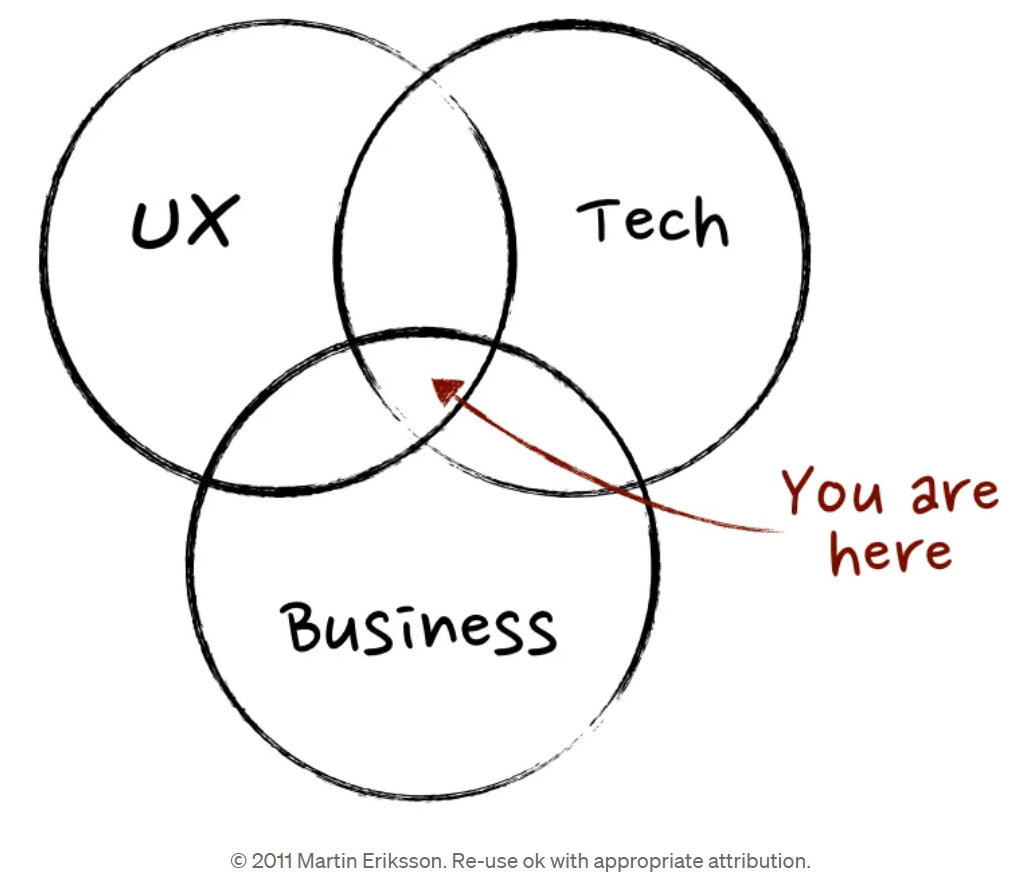
Product Managers balance the user experience, technology, and business needs of a product. We don't have any special authority over those disciplines, but we do set the goals, define success metrics, and motivate our teams to work on the right work at the right time, and are responsible for the outcome. It's fun, really!
I talk more about this on my YouTube channel, where I also interview fellow PMs to discuss our craft.